

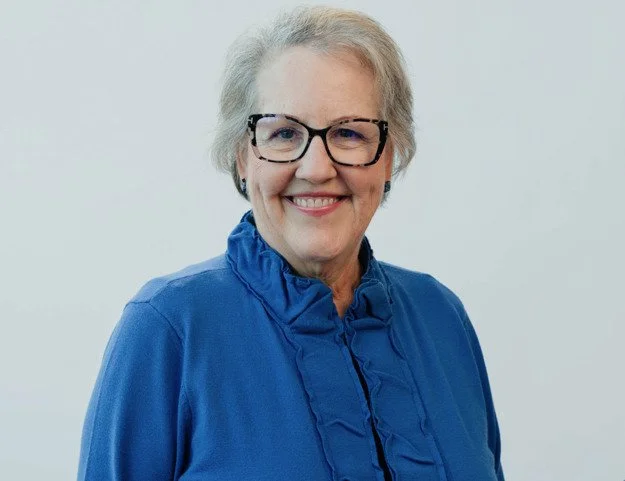
Margaret Collins
By Kia O. Moore
Years ago, I read Malcolm Gladwell’s book The Tipping Point. It explained how to make ideas spread as viruses do. According to the book, there are three types of people needed to make an idea go viral: mavens, connectors, and salespeople. Mavens connect others to the marketplace based on their insider knowledge. They are the data banks. Connectors have the ability to bring people together. They always have a contact to share and act as the social glue. Salespeople are the persuaders who convince others when they are skeptical of an idea, service, or product.
On a hot September weekend in 2026, I met with a woman on the move who fits all three viral archetypes: Margaret Collins. However, she hones in on highlighting one of those viral archetypes by calling herself the Chief Connector and Founder of Creative North Carolina. After 15 years of working as the Executive Director of the Center for Creative Economy, she decided to move on from the company she founded to focus on business development consulting with creative entrepreneurs and nonprofits. She really enjoys working in depth one-on-one with both emerging and growing businesses.
At this meeting, I wanted to tap into Margaret’s maven side and glean information from her about developing a fellowship program. Hip Hop Orchestrated, in partnership with The Collaboration Corp, is developing a fellowship with a curriculum designed specifically for musicians. The fellowship will be known as BLENDED PATHWAYS. The goal of the fellowship is to help musicians see themselves as a business with a brand worth developing and sustaining.
I have 6 key takeaways from the meeting I would like to share.
1. People give to people.
Margaret stressed that people give to people. It is important to meet those with whom you want to collaborate. When they have a face and an understanding of the vision and passion for your project, it has a better chance of getting funded. She said when you are in the beginning phases of fundraising, it is important to get as many informational interviews as possible. Your focus should be to learn about the prospective sponsors and partners. You want to learn about their goals, needs, how they envision working with you, and what success looks like for them.
2. Think local first.
When going after grants, the local route is best. National and international grants are hard to land, especially for a new organization that does not have proof of concept. These robust national grants are extremely competitive and difficult to align your mission and vision with if you have no interaction or knowledge of the organization. After completing your due diligence and meeting the local partners and sponsors, you will be in a better position for funding. Plus, they are hyperfocused on impacting the local community.
3. Do not attempt to do every idea at once.
Hip Hop Orchestrated has a lot of layers and moving parts. Starting out, Margaret encouraged me not to attempt to launch every program in the first year. She suggested I create a minimum viable product first. This involves creating your product or service with the least amount of expense that will still enable you to show a proof of concept at an exceptional level. This is not the first time I have heard this suggestion. Marketing aficionado Phillip Oakley gave me this advice also.
During the conversation with Margaret, I came to the realization that the Rhythmic Ensemble would be the best minimum viable product with which to start. We could have the Rhythmic Ensemble play Black diaspora music with Orchestral music interwoven where it works best. It would uphold the mission of blending Hip Hop and Orchestral music. The makeup of the ensemble being a mix of high school, college, and professional musicians allows for intermingling of generations and income levels. The mentorship structure of the ensemble being college students mentoring high schoolers and professionals mentoring college students, ensures the intermingling happens by design and not happenstance.
4. Finalize your business structure & fiscal sponsor relationship.
I have decided to go with an LLC for my organizational structure while working with a fiscal sponsor for fundraising. This means I will own the business and will be able to partner with a 501(c)3 nonprofit to collaborate on grants and donations.
After speaking with Margaret, I have decided to work with The Collaboration Corp as a fiscal sponsor to deliver the educational programming for Hip Hop Orchestrated. And I will use the LLC for the performance side of the business. It will be necessary to have a clear Memo of Understanding between the organizations so all duties and responsibilities are clear.
5. Create the curriculum first; it will determine the fellowship's length.
The curriculum for BLENDED PATHWAYS is still in the process of being created. We originally projected having this as a year-long fellowship with two classes per month. However, Margaret shared that you cannot determine how many classes are needed until you get the curriculum nailed down. She also suggested reducing the length of the fellowship to a 10-12 week program.
She informed me that if we keep the classes at 3 hours from about 9am–12pm we can provide beverages and snacks for participants. However, if you hold classes past 3 hours, you probably need to provide a meal. This obviously impacts the budget. If you have any volunteers or people donating their knowledge and time to the program, she said to be sure to feed them!
6. Understand how to communicate the monetary value of your fellowship.
With BLENDED PATHWAYS, we were considering awarding a stipend to the fellowship participants. This raised a red flag with Margaret, given we do not have an established budget yet. Given we are still raising seed funding, she wanted to make sure that I calculated all the costs of putting on the fellowship and communicated that value to the participants. You can’t pay people if you don’t have the funds! As an emerging organization, the best practice for a business fellowship would be to charge participants a portion of the cost of the program. That will help convey the value of the excellent education we plan to deliver in our curriculum. People don’t always identify the value in a free program, and we need to generate revenue for the programs as well.
This 2-hour conversation left me with many great gems of information. Margaret is a maven, connector, and salesperson that I feel grateful to have back in my network of active contacts. Next steps are to implement the advice she shared and then tap into the contacts she decides to send my way.
